The short version
The co-operative education programs in Waterloo are one of our community’s greatest assets. Their value cannot be overstated, and many companies—Teledyne FLIR, P&P Optica, Rockwell Automation, Google and more—know that well. From new ideas to entrepreneurial spirit, these students bring significant upside to every organization they join.
In a recent interview, Richard Cunha, Principal Product Manager at Teledyne FLIR UAS Canada, said, “The University of Waterloo co-op program continues to turn out not just excellent resources and engineers before they graduate, but class-leading individuals with relevant expertise on graduation.”
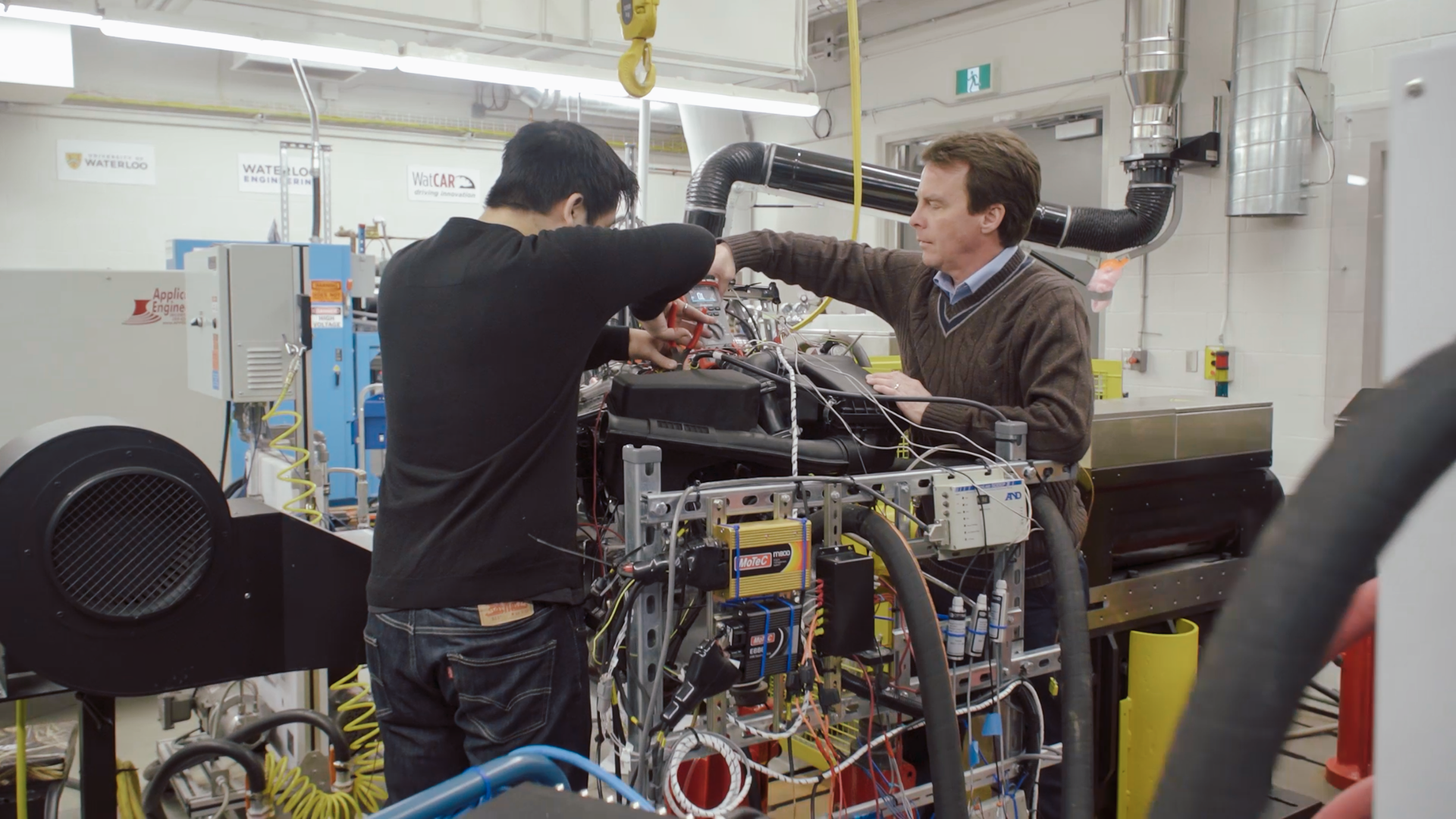
Co-operative education, a work-experience program that gives students the opportunity to apply academic learning through hands-on experience, is prevalent in Waterloo. This week, tens of thousands of students across the region are not only heading back to school, but back to work.
Students at all three local post-secondary schools can alternate between study and work terms throughout their degrees, earning more than 2 years of paid work experience over the five years they spend at school. That’s the benefit of co-op for students—they graduate with work experience, employer connections and often, little or no debt.
Companies (8,000+ and counting) that employ Waterloo co-op students reap the rewards, too. Co-op students often represent what makes Waterloo, well, Waterloo: innovation, entrepreneurship, creativity and collaboration.
What do co-op students bring to the table?
“We have really ambitious young people coming out of the universities with capabilities in everything from the highly technical to the very creative to leadership,” said Heather Galt, Chief Customer Officer at P&P Optica, in a recent interview with Waterloo EDC.
Co-op students bring unique expertise to the workplace. With a co-op hire, you can add someone with a knack for entrepreneurship, tech-savvy skills and a fresh perspective to your team for four to eight months. Often, they can enhance your team’s R&D strategy, bringing research capabilities in everything from aeronautics to automotive to artificial intelligence (AI).
Take the new AI@WORK program at Communitech, in partnership with the University of Waterloo (UWaterloo), for example. Sheldon McCormick, CEO of Communitech, explains: “We embed post-secondary students who are AI natives, who have these unique skills, and put them into middle-sized companies in traditional sectors like healthcare, manufacturing and construction.”
Companies can access talent that transforms the way they operate their businesses, especially concerning new technologies like AI.
“As a proud University of Waterloo alumnus, I experienced firsthand the value of hands-on, experiential learning through the co-op program,” said Mira Lane, VP of Technology and Society at Google, when reflecting on her co-op experience at UWaterloo. Lane adds that Google’s recent partnership with the school “builds on this foundation, allowing [them] to co-create AI-powered learning prototypes alongside students, who are best positioned to envision the future of learning in the AI era.”
Did You Know?
Employers can receive up to $7,000 in reimbursements from the government for hiring co-op students.
How do co-op students influence Waterloo’s startup ecosystem?
The entrepreneurial culture among Waterloo co-op students also nurtures innovation. Several students go on to start their own companies following their co-op placements. In fact, UWaterloo just ranked #7 in the world and #1 in Canada for producing entrepreneurs by PitchBook.
Aeryon Labs, a successful drone and software startup, was founded by students “from the University of Waterloo, from the mechatronics and robotics programs,” says Cunha. “Having all of those disciplines available — and not just available, but taught together and coming together — is extremely beneficial to us.” Aeryon Labs was acquired by Teledyne FLIR in 2019. Two of its founders remain on the entrepreneurial path, and are now growing ENVGO, a marine technology company for maritime operations and security, from Waterloo.
Clearpath Robotics, another homegrown success story, was founded by UWaterloo engineering co-op students. In an interview with co-founder Ryan Gariepy, he shared that co-op programs are “very valuable” to any company that wants to get busy building the future. Gariepy is now the VP of Robotics at Rockwell Automation, the company that acquired Clearpath Robotics for a whopping $800M in 2023.
How does hiring co-op students build my company’s talent pipeline?
Nicole Detlor, Conestoga Food Research & Innovation Lab and BioHub Director, explains the benefit of hiring co-op students for four- or eight-month stints. “When partners work with our students on projects, it’s like a long job interview. They see the students’ work and knowledge firsthand and where possible, hire them after they graduate.”
Employers can assess students’ capabilities through their co-op terms and make well-informed, confident decisions when it comes time to hire for full-time roles. We practice what we preach here at Waterloo EDC and regularly hire co-op students throughout the year. Two previous co-op students are even employed full-time with our organization. Hiring co-op students is an investment in your talent pipeline. More often than not, you get great returns.
For WalterFedy, a local engineering firm, co-op students play an important role in future-proofing their talent pipeline. “We’re really fortunate to have a lot of multi-disciplinary University of Waterloo and Conestoga College grads that work for our firm, some that have even become Partners,” says CEO Garth Cressman, who was once a co-op student at the firm himself. “I was hooked from my first co-op term here.”
"The University of Waterloo co-op program continues to turn out not just excellent resources and engineers before they graduate, but class-leading individuals with relevant expertise on graduation."
Richard Cunha
Principal Product Manager at Teledyne FLIR UAS Canada
What programs can I hire students from?
Our Mapping Talent series dives into the top programs at UWaterloo, Laurier and Conestoga for each industry across the region. Do you need a robotics expert? Or a finance hire with a tech background? How about someone well-versed in quantum computing? Maybe a skilled trades worker with tool and die, carpentry or masonry skills? Our three schools have you covered.
Here are the quick facts:
- UWaterloo has the largest co-op program of its kind in the world, with 26,000+ students and 8,000+ employers.
- Conestoga has 4,000+ students enrolled across 85+ co-op programs and has the largest and most comprehensive trades school in the country, offering students apprenticeship opportunities across the community.
- Laurier is home to Canada’s largest business degree co-op program and 3,000+ students enrolled in co-op across 40+ programs.
Explore our Talent Mapping Series for relevant programs for manufacturing, automotive, cybersecurity, quantum, fintech and more industries.
Key Takeaways
- Waterloo’s co-op programs give companies access to 33,000+ students who bring technical, creative and leadership skills across sectors like AI and manufacturing
- Co-op placements can function as an extended interview, letting employers evaluate talent firsthand before making full-time hiring decisions
- Employers hiring co-op students can receive up to $7,000 in government reimbursements, lowering the cost of building a talent pipeline
Learn more about co-op programs in Waterloo