The short version
Rockwell Automation Vice President of Robotics Ryan Gariepy discusses how the major multinational established its first robotics research and development hub in Waterloo, Canada. From the initial strategic direction, to key location and talent considerations, Gariepy breaks down the whole process, and explains why Waterloo is the perfect place for innovation-focused robotics companies to build the future.
The world is going to need more robots. To help lead the charge, Rockwell Automation established its first-ever robotics-focused R&D hub last year, and the multinational company chose to build it in Waterloo.
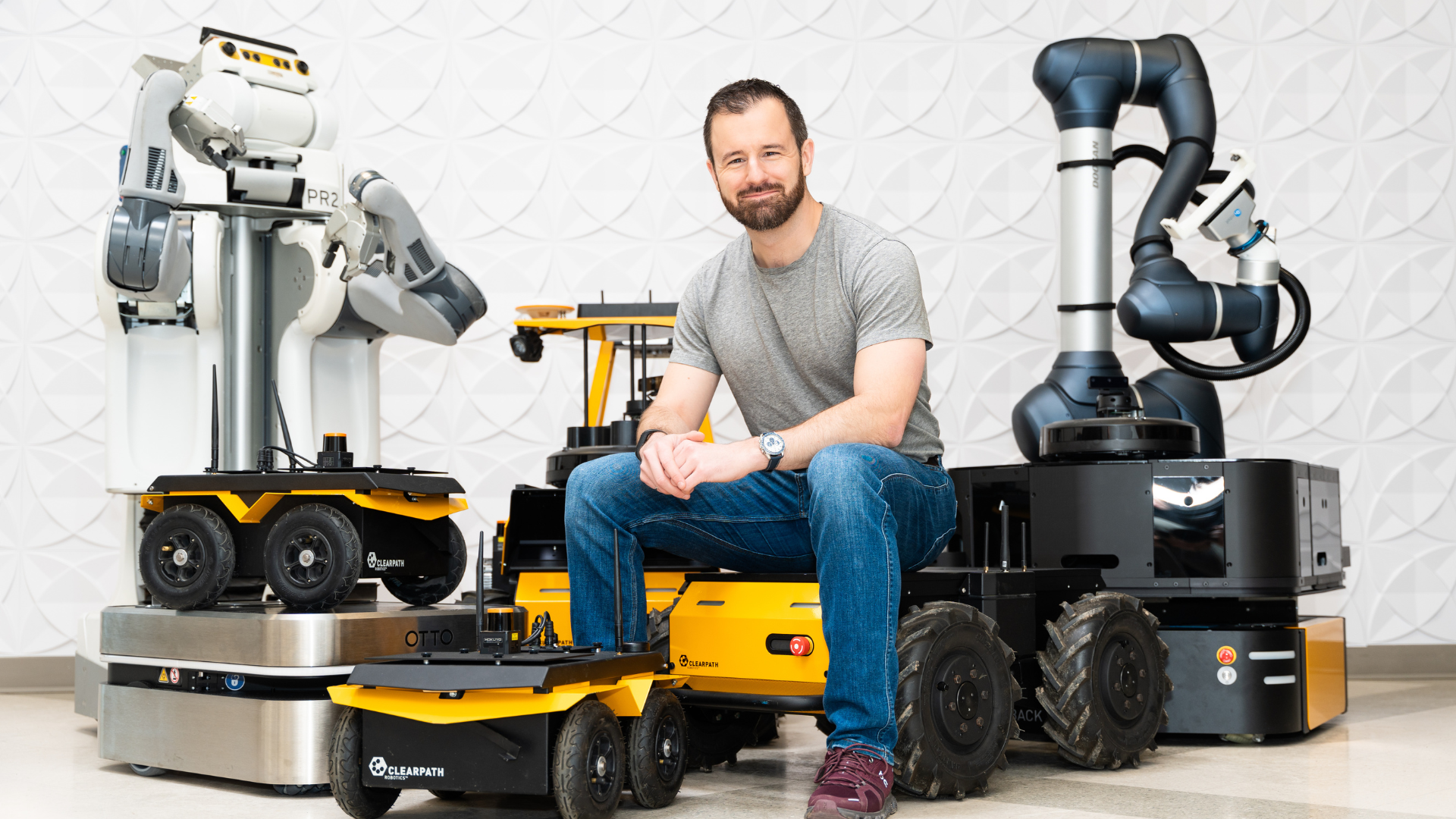
Over the last ten years, Waterloo has morphed into Canada’s largest robotics and automation cluster, and Ryan Gariepy has had more than a front row seat; he’s been instrumental in its transformation. In addition to co-founding Clearpath Robotics and serving as Rockwell Automation’s Vice President of Robotics, he’s part of the team bringing the R&D hub (or Centre of Excellence, as they call it) to life in Waterloo.
A bit of background: Clearpath Robotics was founded in 2009 by Gariepy and three other founders from the University of Waterloo and acquired by Rockwell Automation (a major American manufacturing company with a 70-year legacy in multiple locations across the Waterloo region) for $800M in 2023. Last year, Rockwell added a focused R&D hub to its extensive local operations.
Gariepy sat down with us to talk about what it’ll take for Waterloo to continue its upward trajectory and cement its place as a renowned robotics ecosystem, and as a location where companies can build groundbreaking innovation hubs.
“I definitely think any company related to physical AI should have a forward-looking robotics [research] group,” says Gariepy.
As the world increasingly relies on robotics and physical AI, it’s time to invest in robotics R&D. Here’s an expert’s playbook.
Establishing a multinational R&D hub
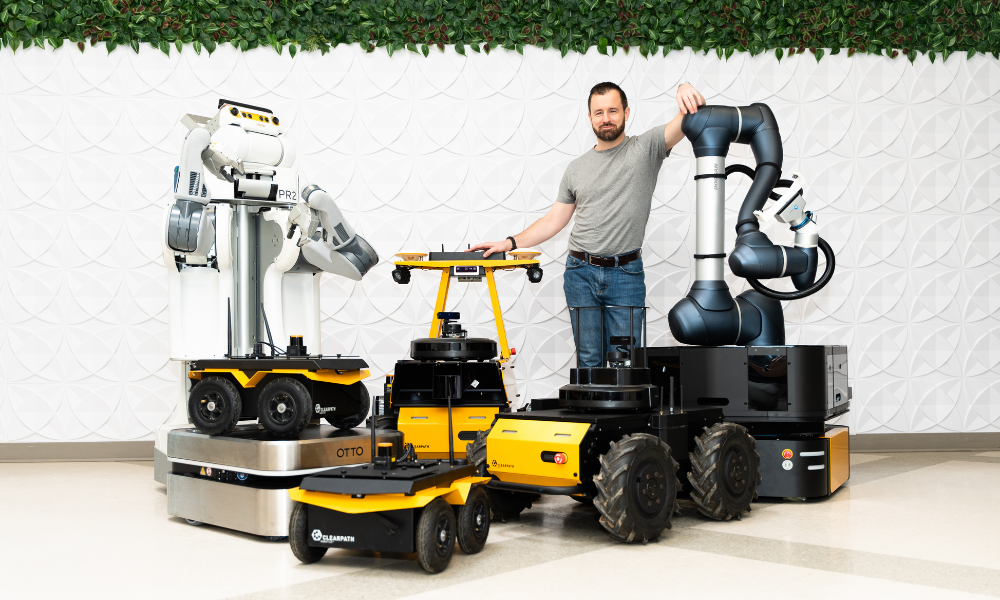
Rockwell’s robotics-focused Centre of Excellence opened in Waterloo last year.
“As part of the post-acquisition integration, we identified that it made sense to form a new group under the office of the CTO made up of a combination of former Clearpath team members and existing Rockwell staff, entirely focused on robotics research and innovation,” shares Gariepy.
“The first time Rockwell established a focused effort in robotics research was catalysed by the Clearpath acquisition,” says Gariepy. He explains that this is a benefit of building startups that are deeply integrated with the community. “Because of the technology, team and skills we brought to the table, [the Centre of Excellence] was built around the Clearpath team … in Waterloo.”
While Rockwell’s other R&D hubs around the world focus on other aspects of advanced technology and AI, the Centre in Waterloo has one focus: robotics.
The first part of the Centre’s job is to understand what robotics research is valid and should be prioritized, cutting through the hype. The Centre then collaborates with the rest of Rockwell’s product team to ensure they’re building the right technology for the company. From there, researchers at the Centre work to produce robotics that are applicable, innovative and meet the moment.
Finally, the Centre tries to “get out there and interact with the community” by sharing problems they’re encountering and research they’re doing, and helping people differentiate between real business problems and hypothetical ones. This community element is essential to the development of robotics innovation in the Waterloo region and beyond.
“The potential of robotics to make the world a better place is substantial, but Rockwell can’t do it alone,” says Gariepy.
Laying the foundation for innovation
Gariepy breaks down how a company could create a dedicated robotics-related research function within its organization.
If you’ve already hired a CTO, the next step is to “understand where robotics fits – or doesn’t – in your business.” It’s important to identify which areas you want to compete in. Across your product lines, what are you going to build internally? What are you going to buy from suppliers or distributors? Where are you going to choose to partner, and with whom? The answers to these questions will inform the structure of the research organization and the team you need to establish.
Then, Gariepy moves on to the question of location. “Talent is obviously important, as is logistics, airport access, time zones, and cultural alignment.” Waterloo is relatively close in all of these factors to Milwaukee, Wisconsin, where Rockwell is headquartered, which makes it easier to communicate.
Other key factors are academic partnerships and co-operative education programs. “Co-op programs and partnerships are also very valuable,” says Gariepy, “and I think underappreciated.” Hiring interns or co-op students for the rapid-paced technology work that occurs at R&D hubs gives your team flexibility and a balance between emerging talent and established knowledge.
Finding an ecosystem that delivers on the vision
Robotics requires balance. You don’t need to be a trained robotics engineer like Gariepy to understand that balance is important for building robots that are structurally stable and mobile, or that the sector itself straddles tech and manufacturing.
Waterloo provides that kind of equilibrium in its ecosystem for Clearpath, Rockwell and the Centre of Excellence.
“The tech community, the business community and the broader Waterloo community—it’s ambitious, it’s experienced and yet it’s still welcoming and diverse,” says Gariepy. “That’s a great balance.”
For example, he explains that “you don’t have a monoculture of developers” in Waterloo.
“Machinists are here. Electricians are here. That’s very challenging to replicate elsewhere, like Tokyo or the Bay Area,” he says. “It’s very difficult to find a decent industrial electrician or machinist in the Bay Area, much less an actual user of our products. Here, it’s far more feasible.”
The Waterloo region is a balanced community of people with a diversity of practical experience in manufacturing, tech, research and more. Gariepy believes it’s not easy for a region to get robotics “right,” but putting effort into practical applications goes a long way. Waterloo is a place where talented, experienced people are digging deeper into the most practical and necessary robotics applications: mining, forestry, defence, healthcare and more.
“Right now, [Waterloo] is a place where everyone is exploring where robotics will actually be useful,” says Gariepy. Researchers are taking the time to figure out how to build a product that people want and need. And to do that, you need to get the builders, innovators, industry experts and consumers in the same room, in the same community.
"The tech community, the business community and the broader Waterloo community—it’s ambitious, it’s experienced and yet it’s still welcoming and diverse. That’s a great balance."
Ryan Gariepy
Vice President of Robotics, Rockwell Automation
Peering into the future for Clearpath and Rockwell
With all the right people in the room, Rockwell, a company with a global legacy, is taking a chance on robotics.
“We’re just starting to scratch the surface of what can be done when you mix a robotics startup’s capabilities with the heritage of a company like Rockwell,” comments Gariepy. “I’m excited to see what comes next.”
And what comes next is a society that relies on robots.
“We need to be using robotics more,” says Gariepy. “We need to be using them in our factories, on our streets, in our construction sites, in our hospitals … If we’re going to be a leader in physical AI, we need to make sure that everyone is interacting with robots on a regular basis.”
Gariepy is committed to engineering this transition from Waterloo, and with its first robotics Centre of Excellence, Rockwell seems to be too.
Fuel the future of robotics from Waterloo
Interested in establishing a robotics R&D hub in our ecosystem? Our team can connect you with the right people.